XGIMI introduces Aura 3 Max and Aura 3 Pro 4K/120Hz UST projectors
XGIMI's Aura 3 UST series combines RGB triple laser projection and 4K/120Hz playback; a refundable $50 reservation runs ahead of its October 20 Kickstarter launch.
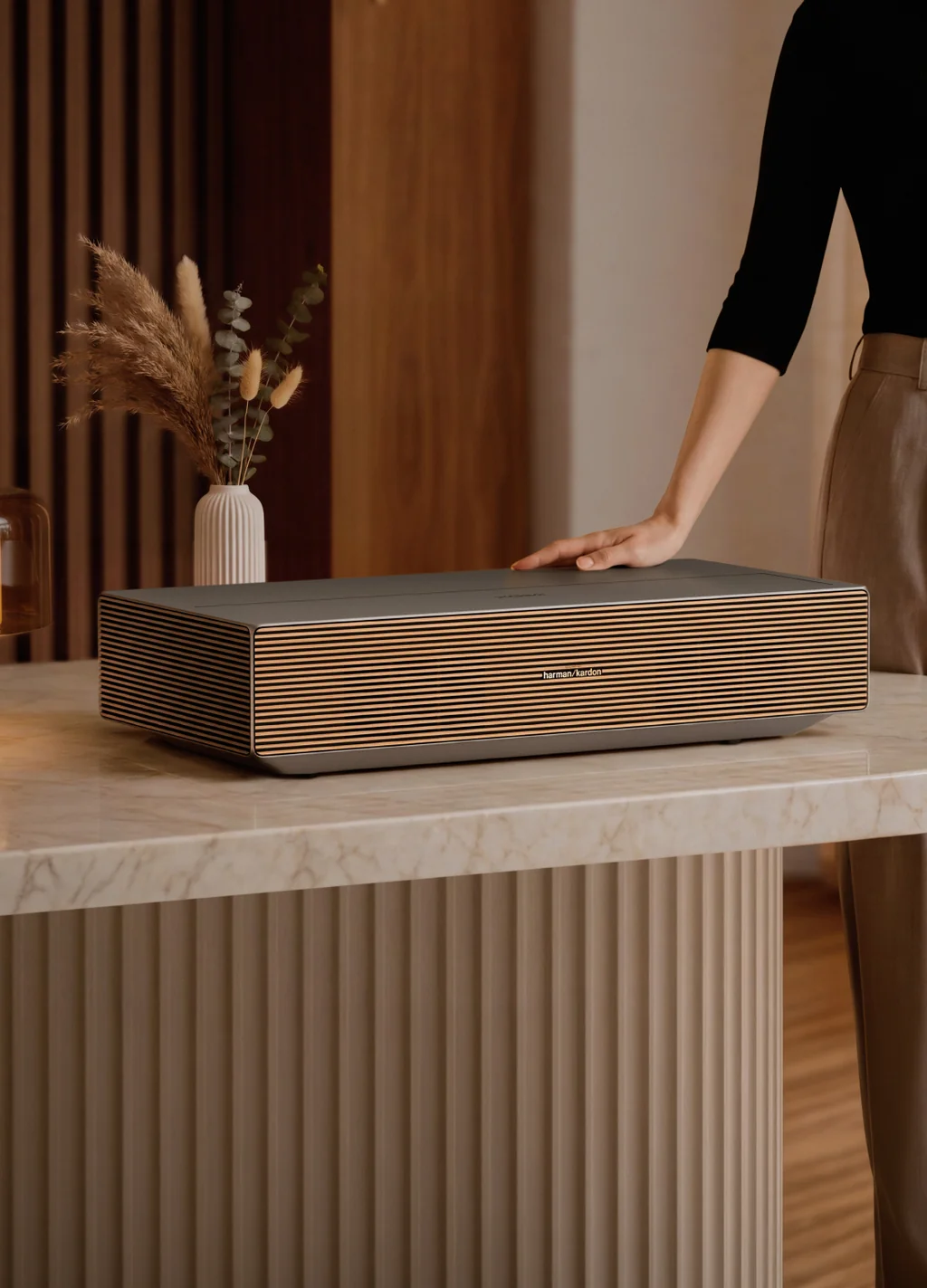
4K/120Hz arrives in XGIMI's UST range
XGIMI introduced the Aura 3 Max and Aura 3 Pro ahead of IFA 2026. Both are RGB triple-laser ultra-short-throw projectors with 4K/120Hz playback, Dolby Vision, IMAX Enhanced and the company's dual dynamic iris plus DBLE processing. The Max is quoted at 5,700 ISO lumens and 8,000:1 native contrast; the Pro at 4,100 ISO lumens and 7,000:1.
The notable part is not just the brightness gap between the two. XGIMI is trying to bring a high-refresh gaming proposition to the UST form factor, where buyers have traditionally prioritised easy living-room placement over responsiveness.
The Max versus Pro split
Brightness and contrast aside, the two share a platform: the same X-VISION AI image processor, a claimed 110% coverage of BT.2020, the same HDR line-up (Dolby Vision, HDR10+, HLG, IMAX Enhanced, Filmmaker Mode) and Google TV with Gemini voice control. Optics are shared too, a 19-element system on ED-grade glass with a 0.163:1 throw ratio, putting a 120-inch image about 20cm from the wall. Audio is an 80W Harman Kardon system with Dolby Atmos and DTS Virtual:X, over three HDMI ports, gigabit Ethernet, USB 2.0/3.0 and optical audio. The Pro reads as a lower-lumen, lower-contrast version of the same design, not a stripped-down one.
What 4K/120Hz asks of a UST
XGIMI attributes the 4K/120Hz playback to dual TI DLPC controllers, doubling the pixel-processing hardware most UST projectors carry, which is why it is billing the Aura 3 as the first UST lineup to clear that bar. The fine print matters: according to New Atlas, only two of the three HDMI ports accept a 4K/120Hz input, and the widely quoted 1ms response time applies at 1080p/240Hz rather than native 4K/120Hz. Gaming support also includes AMD FreeSync Premium with VRR and auto low-latency mode. None of these figures are independently measured yet.
Dual dynamic iris and DBLE, in plain terms
The dual dynamic iris uses two physical irises in the light path, one adjusting continuously to scene brightness, which XGIMI calls a first for the category. DBLE, its Dynamic Black Enhancement processing, is claimed to lift perceived contrast by up to roughly tenfold on suitable content. That dynamic figure is not the native 8,000:1 (Max) or 7,000:1 (Pro) rating: one is a fixed optical measurement, the other depends on the iris and processing reacting in real time.
Pre-order, Kickstarter date and launch pricing
XGIMI opened its Aura 3 reservation programme on September 1. The $50 deposit is explicitly a reservation rather than a purchase, XGIMI states, and no physical item ships from that page. It unlocks a Kickstarter launch link on October 20 and an additional $200 discount, provided the same email address is used for the deposit and the Kickstarter pledge.
Kickstarter list prices are $2,399 for the Max and $2,199 for the Pro, against stated recommended prices of $4,999 and $3,999. With the deposit applied, Super Early Bird prices drop to $2,199 (Max) and $1,999 (Pro). The deposit is refundable before the campaign closes and again afterwards if a backer does not proceed. XGIMI expects shipping to begin in December, with backers fulfilled in Kickstarter order.
Kickstarter risk on top of unverified numbers
Every brightness, contrast and latency figure above is a manufacturer claim, and the Aura 3 is launching through Kickstarter rather than retail, which carries its own funding and delivery risk regardless of XGIMI's refund terms. Reviewers will need calibrated ISO lumens against the 5,700 and 4,100 claims, native contrast with the iris held fixed, how the iris and DBLE behave on mixed dark-and-bright scenes, whether 4K/120Hz holds up at full chroma with HDR active, and real input lag at native resolution rather than the quoted 1080p/240Hz figure.
Sources
- https://us.xgimi.com/pages/aura-3-max
- https://us.xgimi.com/products/aura-3-series-deposit-reservation
- https://eu.xgimi.com/blogs/news/meet-xgimi-aura-3-series-at-ifa-2026
- https://www.prnewswire.com/news-releases/xgimi-aura-3-series-debuts-at-ifa-as-worlds-first-4k-120hz-ust-projector-lineup-302867482.html
- https://www.prnewswire.com/news-releases/xgimi-opens-pre-orders-for-the-aura-3-series-the-worlds-first-4k-120hz-ust-projector-lineup-302865860.html
- https://newatlas.com/home-entertainment/xgimi-aura-3-max-pro-4k-120hz-ust-projector/
Related Reading
XGIMI Unveils HORIZON 30 Series: 4K at 120Hz, Dual Iris Technology, and Up to 10,000:1 Native Contrast
XGIMI unveils the HORIZON 30 Pro, Max, and Ultra Max with RGB triple laser, 4K 120Hz, Dual Iris technology, and major contrast improvements.
Apple Music Hall Will Stream Concerts Globally From a 48-Speaker Spatial Audio Venue
Apple's new 600-capacity London venue combines Spatial Audio production, multicamera capture and global livestreaming, but home playback formats remain unannounced.
Epson Brings Three 4K Laser Projectors to the US From $1,999
The Home Cinema LS5000, LS6000 and short-throw LS7500 combine 3LCD laser engines, 4K/120Hz input and prices from $1,999.99.