XGIMI Unveils HORIZON 30 Series: 4K at 120Hz, Dual Iris Technology, and Up to 10,000:1 Native Contrast
XGIMI unveils the HORIZON 30 Pro, Max, and Ultra Max with RGB triple laser, 4K 120Hz, Dual Iris technology, and major contrast improvements.
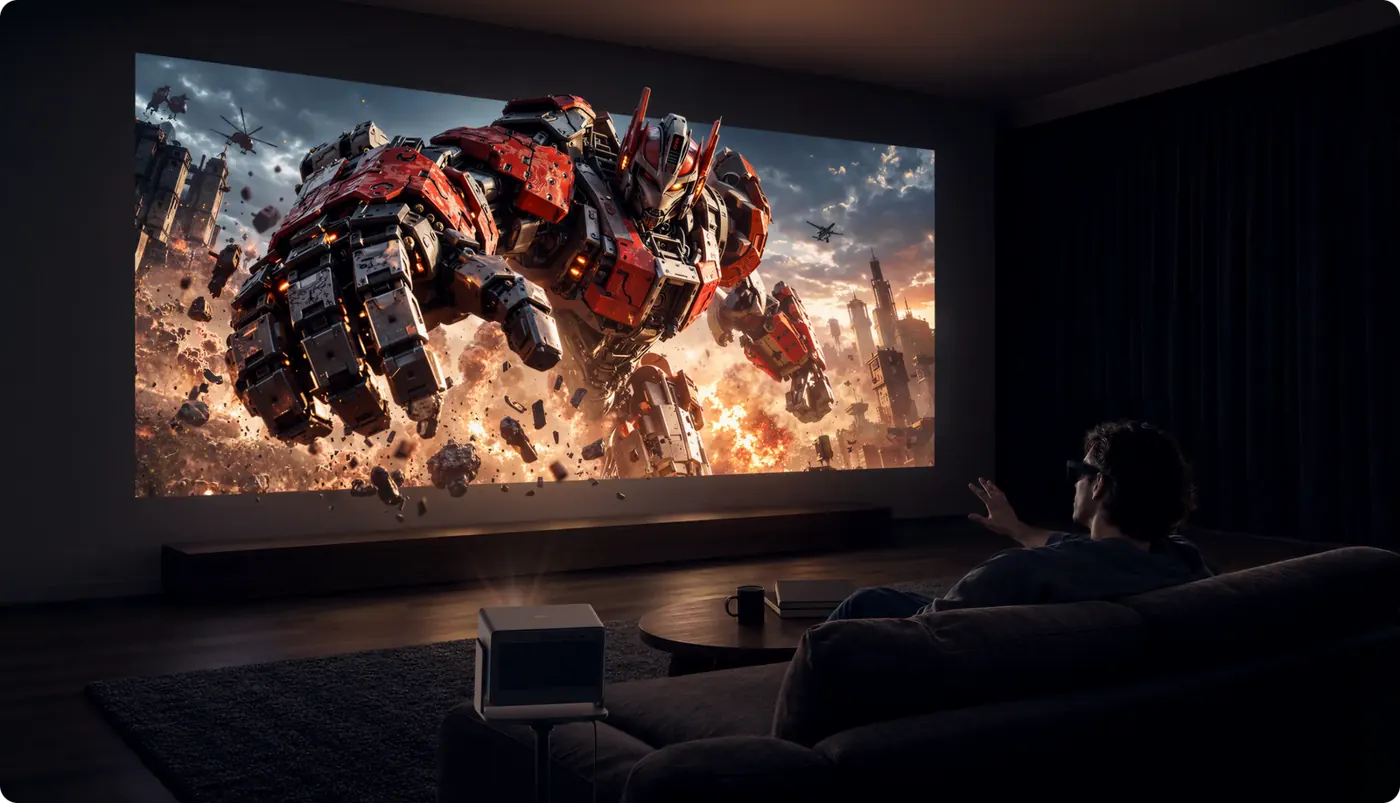
XGIMI has introduced its next-generation HORIZON 30 projector lineup on October 12, 2026. Featuring three new models, the series brings improvements in brightness, contrast, and gaming performance, including a new dual iris system and support for 4K resolution at 120Hz.
Following the HORIZON 20 series, XGIMI is taking another step forward in the premium home theater projector market. The new lineup consists of the HORIZON 30 Pro, HORIZON 30 Max, and HORIZON 30 Ultra Max, all sharing a common technological foundation while offering different levels of brightness and contrast performance.
Alongside higher brightness figures, XGIMI has introduced changes to its optical system, light management, and image processing capabilities.
Three Models, Up to 6,600 ISO Lumens
All three projectors feature RGB Triple Laser technology, using separate red, green, and blue laser light sources. The HORIZON 30 Pro is listed at 4,800 ISO lumens, while the flagship Ultra Max targets enthusiasts looking for more brightness on larger projection screens.
| Specification | HORIZON 30 Pro | HORIZON 30 Max | HORIZON 30 Ultra Max |
|---|---|---|---|
| Brightness | 4,800 ISO lumens | 5,300 ISO lumens | 6,000–6,600 ISO lumens* |
| Native Contrast (up to) | 8,000:1 | 9,000:1 | 10,000:1 |
| Resolution | 4K UHD | 4K UHD | 4K UHD |
| Refresh Rate | 4K 120Hz | 4K 120Hz | 4K 120Hz |
| Dual Iris | Yes | Yes | Yes |
| RGB Triple Laser | Yes | Yes | Yes |
Published brightness specifications for the Ultra Max currently vary between 6,000 and 6,600 ISO lumens. The final figure remains to be clarified. These are advertised specifications, rather than our own measurements.
Dual Iris: The Most Important Upgrade?
Perhaps the most interesting innovation in the HORIZON 30 series is Dual Intelligent Iris technology.
One of the biggest challenges for high-brightness projectors is balancing light output with black-level performance. Powerful laser projectors can deliver striking HDR highlights, yet dark scenes may appear gray rather than convincingly black in a fully darkened room.
XGIMI's new system combines mechanical aperture adjustment with intelligent light control. The aperture is described as adjustable between f/2.0 and f/7.0 across five levels, allowing more precise control over light output.
The flagship Ultra Max is advertised with a native contrast ratio of up to 10,000:1. However, maximum brightness and maximum contrast are not necessarily achievable simultaneously. Narrowing the iris can improve black levels while reducing overall light output.
Independent testing will be essential to establish how the system behaves with real films, particularly dark HDR scenes. The useful result is not simply the highest contrast number, but the balance between deeper blacks and enough remaining brightness for the screen.
4K at 120Hz: A Major Upgrade for Gaming
The previous HORIZON 20 generation already offered refresh rates of up to 240Hz at Full HD resolution, but 4K playback was limited to 60Hz. The HORIZON 30 series changes that, with all three models supporting 4K at 120Hz.
This makes the new projectors particularly interesting for modern gaming consoles and high-performance gaming PCs. Announced gaming features include:
- Variable Refresh Rate (VRR)
- Auto Low Latency Mode (ALLM)
- AMD FreeSync support
- Input latency reportedly as low as 1.9 ms under supported gaming conditions
The listed 1.9 ms figure is associated with 4K 120Hz in Game Mode, with VRR enabled and automatic keystone correction disabled. It should be treated as a specification to verify rather than a measured result from ProjectorLabz.
Together, these features should help deliver smoother gameplay, reduced screen tearing, and faster response times.
A 120Hz display also offers the possibility of presenting 24fps films with each frame repeated five times evenly, avoiding the uneven cadence of 3:2 pulldown. Whether a particular playback path uses that cadence depends on the projector's settings and signal handling.
Improved Optics and AI-Powered Image Processing
The HORIZON 30 series introduces the X-Master Red Ring optical system alongside X-Vision image processing. The latter uses AI-based algorithms designed to improve image detail, contrast, and HDR presentation.
The announced feature set includes Dolby Vision, HDR10+, IMAX Enhanced, and 3D playback.
Installation flexibility remains an important strength of the lineup. Each model includes optical zoom, horizontal and vertical lens shift, and Lens Memory. These functions help users position the image optically and recall saved configurations, especially when switching between screen formats.
Google TV provides built-in streaming functionality, while automatic focus and screen alignment simplify everyday operation. Audio is handled by a Harman Kardon-tuned speaker system with two 12-watt drivers.
How Does the HORIZON 30 Compare to the HORIZON 20?
The HORIZON 20 generation already offered RGB Triple Laser technology, Dolby Vision, optical zoom, and lens shift. The new series therefore builds on an established platform.
For example, the HORIZON 20 Pro's advertised 4,100 ISO lumens rise to 4,800 ISO lumens on the HORIZON 30 Pro. While that increase is welcome, the more consequential changes may be Dual Iris and the higher 4K refresh rate.
Contrast specifications deserve careful interpretation. The previous generation's advertised electronically enhanced contrast values cannot be directly compared with the native contrast figures published for the HORIZON 30 series.
Real-world measurements will be needed to establish the improvement in black levels, contrast within mixed scenes, and HDR performance. For existing HORIZON 20 owners, those results may determine whether upgrading is worthwhile.
Pricing and Availability
Pre-orders opened on October 12, with initial European shipments expected in November. Promotional European prices are listed as follows:
| Model | Pre-Order Price |
|---|---|
| HORIZON 30 Pro | €1,999 |
| HORIZON 30 Max | €2,499 |
| HORIZON 30 Ultra Max | €2,999 |
These prices are listed on XGIMI's European launch campaign as well as by a European retailer. The promotional period runs through October 31; regional pricing, availability, and shipping schedules may vary.
A Promising Step Forward for Home Theater Projection
The combination of RGB Triple Laser technology, high brightness, 4K 120Hz support, and Dual Iris makes the HORIZON 30 lineup interesting for both home theater enthusiasts and gamers. The major optical and refresh-rate upgrades appear across all three models.
The Pro could offer a compelling balance of performance and price, while the Max and Ultra Max provide additional brightness and contrast reserves for more demanding installations.
The decisive question is how much the iris system improves black levels at a brightness setting people would actually use. A narrow-aperture contrast figure alone cannot answer that. For buyers considering an upgrade, the most useful comparison will be the HORIZON 20 and HORIZON 30 at matched screen brightness, with the same dark and mixed-brightness scenes.
Related Reading
Apple Music Hall Will Stream Concerts Globally From a 48-Speaker Spatial Audio Venue
Apple's new 600-capacity London venue combines Spatial Audio production, multicamera capture and global livestreaming, but home playback formats remain unannounced.
Epson Brings Three 4K Laser Projectors to the US From $1,999
The Home Cinema LS5000, LS6000 and short-throw LS7500 combine 3LCD laser engines, 4K/120Hz input and prices from $1,999.99.
Yamaha B200A Brings Dolby Atmos to Desks and Smaller TVs
The 60cm all-in-one combines virtualized Dolby Atmos, a built-in three-inch subwoofer and HDMI eARC in a cabinet designed for bedrooms, offices and gaming setups.