Valerion VisionMaster Pro 2 keeps pressure on premium lifestyle projection
RGB triple laser, 4K HDR with Dolby Vision, HDR10+ and IMAX Enhanced, and 1080p at 240Hz for gaming: the VisionMaster Pro 2 claims a lot for a lifestyle chassis.
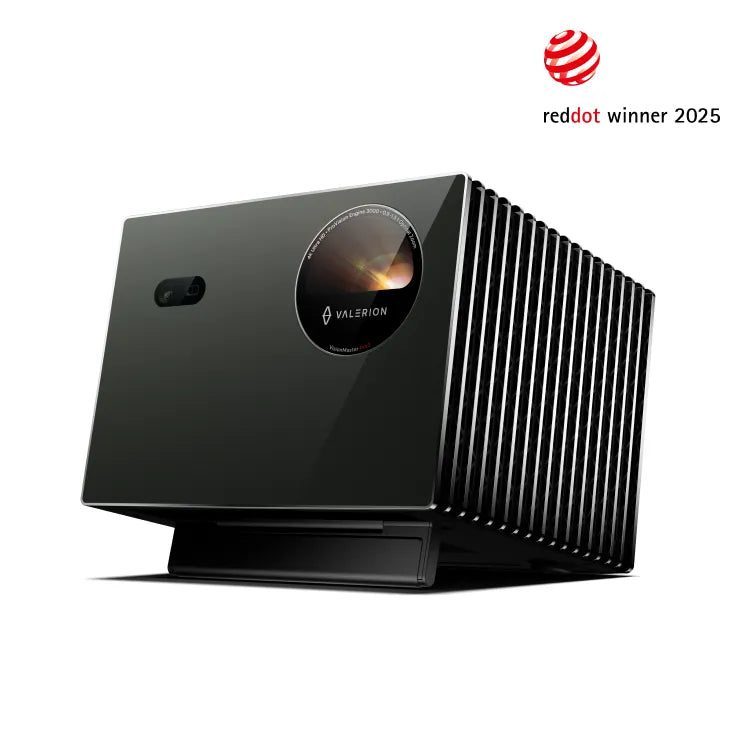
Dolby Vision, HDR10+, IMAX Enhanced and 1080p at 240Hz are an ambitious set of claims for a projector built to sit on a living-room shelf. The VisionMaster Pro 2 combines them with RGB triple-laser projection and 4K HDR, placing it between a traditional dedicated cinema model and a casual portable.
That feature set is why review coverage has been important. A projector can claim a lot of formats and still struggle with calibration, contrast or software. The Pro 2 needs to prove that the convenience design does not come at the expense of image discipline.
Where the coverage has concentrated
RTINGS identifies the VisionMaster Pro 2 as a 4K HDR projector with an RGB triple-laser light source, broad HDR support and eARC audio passthrough. Other review coverage has focused on brightness, setup convenience and gaming. The common theme is that Valerion is trying to offer a premium all-in-one projector that competes with more established names, in a space where buyers want serious image quality without a traditional theatre installation.
For gamers, the high-refresh 1080p mode is attractive, but the important test is how much detail is preserved and what the actual input lag looks like in each mode.
Versatility is the case, complexity is the risk
The Pro 2's strongest case is versatility: movies, streaming, gaming and living-room use from one device. The risk is that all-in-one projectors become complicated, with too many modes and not enough clarity about which settings are accurate. Lifestyle projectors can also vary dramatically between spec sheet and reality; a model may advertise wide colour, HDR formats and gaming features, yet still struggle with black level, tone mapping or fan noise.
A long-term review therefore has to cover Dolby Vision, HDR10+, SDR calibration, fan noise, app behaviour, eARC and gaming latency, and setup as well: autofocus, optical zoom or digital correction, app stability and how the projector copes with being moved between rooms.
The result will hinge on measured picture quality and everyday reliability, not the length of the feature list. The 240Hz mode is useful only if it preserves a sharp, responsive image, while Dolby Vision and HDR10+ matter only if the projector maps them convincingly in a real room.
Related Reading
XGIMI Unveils HORIZON 30 Series: 4K at 120Hz, Dual Iris Technology, and Up to 10,000:1 Native Contrast
XGIMI unveils the HORIZON 30 Pro, Max, and Ultra Max with RGB triple laser, 4K 120Hz, Dual Iris technology, and major contrast improvements.
Apple Music Hall Will Stream Concerts Globally From a 48-Speaker Spatial Audio Venue
Apple's new 600-capacity London venue combines Spatial Audio production, multicamera capture and global livestreaming, but home playback formats remain unannounced.
Epson Brings Three 4K Laser Projectors to the US From $1,999
The Home Cinema LS5000, LS6000 and short-throw LS7500 combine 3LCD laser engines, 4K/120Hz input and prices from $1,999.99.