TCL puts Google Gemini on the PlayCube, and brings the microphone question with it
Gemini reaches the PlayCube from 22 June 2026 with Ask, Briefs, Learn and Create modes; TCL names no markets, no firmware version and says nothing about the far-field microphone.
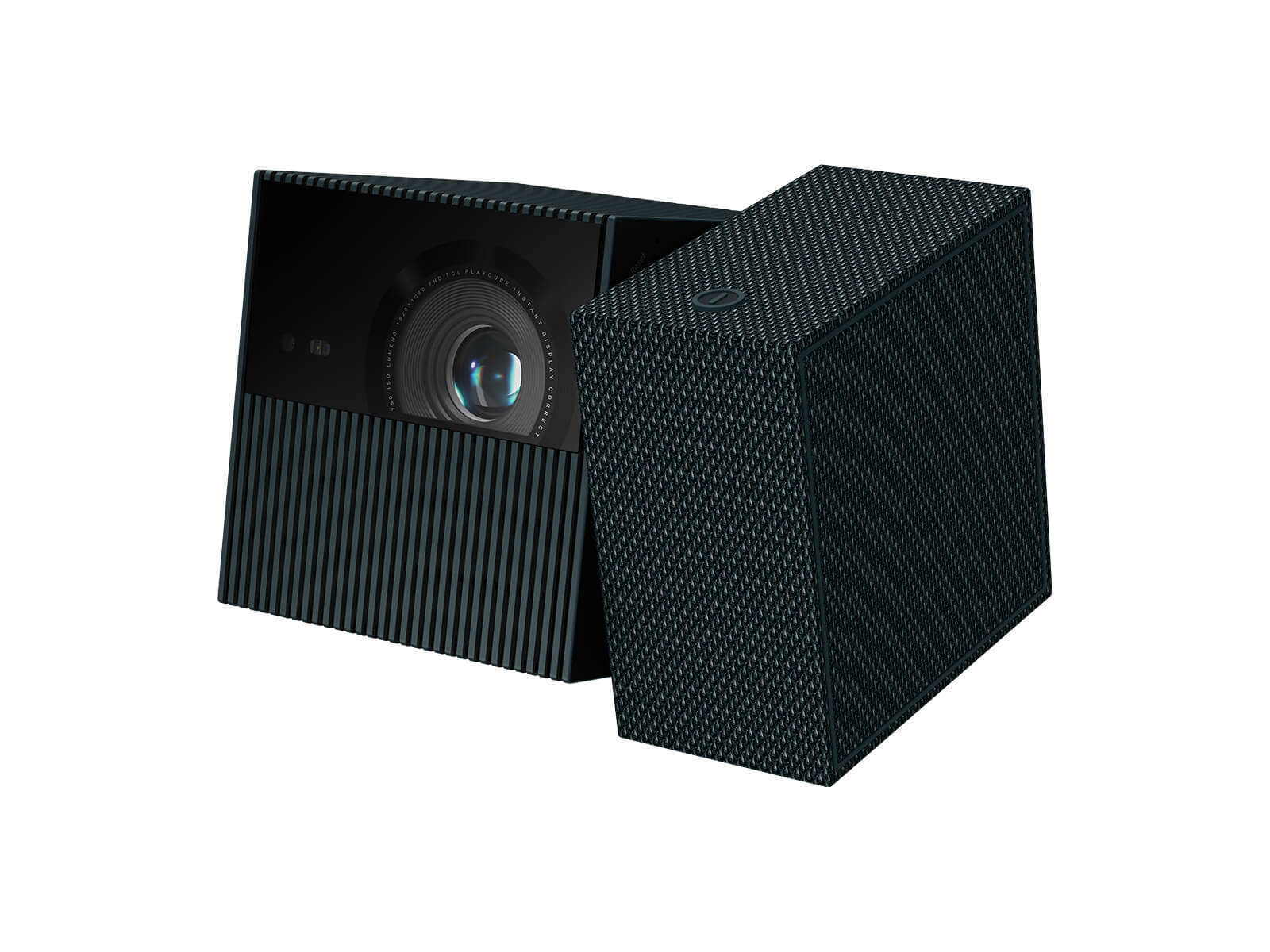
Nothing about the PlayCube's optics, light engine or battery changes with the Gemini AI update TCL began rolling out on 22 June 2026. This is a software change to a product that has been on sale since autumn 2025, not a new model.
The PlayCube is a palm-sized cube that rotates to throw an image onto walls or ceilings: 750 ISO lumens, a 0.33-inch DMD chip, native 1080p accepting 4K input, a 66Wh battery quoted at up to three hours, and Google TV pre-installed with Netflix certification. It launched at 799 dollars in the US and £799.99 in the UK. Its hands-free voice control ran on Google Assistant, which TCL's own product page still lists.
Four modes, and only two of them are projector-shaped
TCL describes the update in four parts. Ask handles natural-language queries, recommendations and episode recaps. Briefs assembles a personalised feed of sports highlights and news. Learn generates diagrams and explanatory images. Create produces visuals from a description and can animate photographs using Google's Veo video generation model.
Ask and Briefs make obvious sense here. Voice search has always been more useful on a projector than on a television, because a projector is usually operated from a sofa in a dark room with a remote that has gone missing, and because a rotating portable gets repointed constantly. Cutting the button presses between "on" and "playing" is an improvement in daily use rather than a feature listing.
Learn and Create lean on the one thing a projector does that no other display does: it makes a large image cheaply, on any surface, in any room. A generated diagram at 100 inches on a bedroom wall is a different object from the same diagram on a tablet. Whether households actually use that is another matter, and scepticism is fair. Generative features on television platforms have a strong record of being tried once and forgotten.
Create also has the biggest gap between demonstration and daily use. Veo generation is a cloud service with real latency and cost behind it, and TCL has not said what usage limits apply, whether the capability is tied to a Google account tier, or how long it stays free.
The microphone is the part worth pausing on
Hands-free voice control means a far-field microphone listening for a wake word whenever the device is powered. On a fixed television that is a familiar trade. On a battery-powered cube carried between rooms, taken outdoors and pointed at bedroom ceilings, the same microphone sits in a lot more places.
None of the Gemini modes run locally. Queries, recaps, diagrams and Veo animations are processed remotely, so voice input leaves the room. The announcement does not address microphone handling at all: no hardware mute mentioned, no statement on retention of voice recordings, no detail on how the assistant behaves when several people are present and only one has an account linked.
No markets, no schedule, no firmware version
The release carries a US dateline and names no markets, no regional rollout schedule and no firmware version. Gemini availability on Google TV has varied by country, and European buyers of a projector TCL only brought to the region in 2026 get no confirmation here that the update reaches their units at all. TCL says it intends to extend similar features across its wider display range, but that is an intention rather than a timetable.
Sources
- https://www.prnewswire.com/news-releases/tcl-playcube-evolves-powered-by-gemini-ai-ushering-in-a-new-era-of-intelligent-interaction-for-portable-projectors-302806518.html
- https://www.tcl.com/global/en/projectors/playcube
- https://newatlas.com/home-entertainment/tcl-playcube-projector-gemini/
- https://www.tclcentral.com/tcl-playcube-portable-projector-launched-specs-price/
- https://www.androidauthority.com/tcl-playcube-projector-gemini-rollout-3680016/
Related Reading
XGIMI Unveils HORIZON 30 Series: 4K at 120Hz, Dual Iris Technology, and Up to 10,000:1 Native Contrast
XGIMI unveils the HORIZON 30 Pro, Max, and Ultra Max with RGB triple laser, 4K 120Hz, Dual Iris technology, and major contrast improvements.
Apple Music Hall Will Stream Concerts Globally From a 48-Speaker Spatial Audio Venue
Apple's new 600-capacity London venue combines Spatial Audio production, multicamera capture and global livestreaming, but home playback formats remain unannounced.
Epson Brings Three 4K Laser Projectors to the US From $1,999
The Home Cinema LS5000, LS6000 and short-throw LS7500 combine 3LCD laser engines, 4K/120Hz input and prices from $1,999.99.