Epson takes the 10,000-lumen QL7000 to a 215-inch 2.0:1 screen at CEDIA Expo 2026
At CEDIA Expo 2026 Epson pairs the 10,000-lumen QL7000 with a 215-inch 2.0:1 Stewart masking screen, roughly 78 foot-lamberts at unity gain.
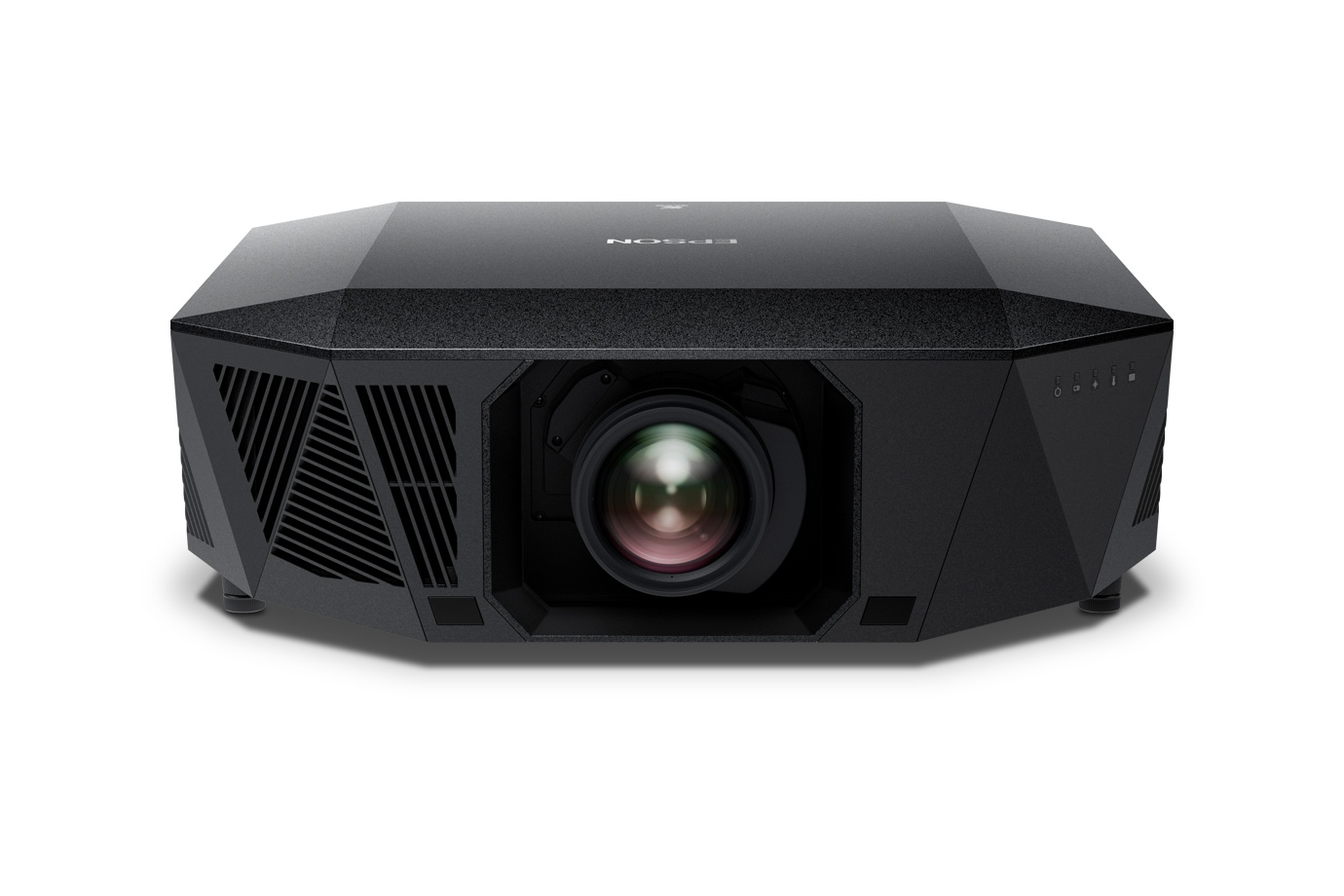
Booth 1319 at CEDIA Expo 2026 will hold a 215-inch screen in 2.0:1, and the projector feeding it is rated at 10,000 lumens. That is the centrepiece of Epson's stand for the show's 1 to 4 September run in Denver: a demonstration called The Art of Home Cinema, pairing the QL7000 4K 3LCD laser projector with a Stewart Filmscreen Director's Choice Generation 2 four-way masking screen.
Epson frames the ratio around the growing volume of streaming titles delivered at 2.0:1. The more useful reading is a demonstration of what a projector must deliver before a screen that large stops being a compromise.
Brightness on a screen is a density, not a total
A 215-inch diagonal at 2.0:1 is roughly 192 inches wide by 96 high, about 128 square feet of image. Spreading 10,000 lumens across that area gives approximately 78 foot-lamberts at unity gain, and a modest-gain material pushes it toward 100 fL.
The reference target for commercial cinema is around 16 fL. Four to six times that is what makes HDR highlights on a 16-foot-wide image credible rather than merely large. Feed the same screen 3,000 lumens and the picture is big and dim. That is the QL7000's function in a home: usable light density on a screen most projectors cannot serve.
Two more rooms, neither a dedicated cinema
The second area, Elegantly Invisible Projection, addresses rooms that are not dedicated cinemas. One setup uses the QL7000 with Stewart's 160-inch Balón Edge Phantom HALR+ ambient-light-rejecting, acoustically transparent screen; another pairs it with the ELPLX02S short-throw lens and a 135-inch Luxus G2 electric roller screen in GrayMatte 70. Both attack the same problem: light-rejecting material and grey gain for a compromised room, a retractable screen and short throw for a room that must look like a living space afterwards. A live Q-Series comparison is more useful to integrators than any hero demo.
The QL7000 on paper, and two things missing from it
Epson's specification sheet describes a true three-chip 3LCD design with Double Micro-Lens Array, using the company's 4K display technology to place 8.29 million pixels on screen, with images up to 300 inches. Brightness is quoted as up to 10,000 lumens of colour brightness, IDMS rated, and up to 10,000 lumens of white brightness, ISO rated, varying by lens.
Processing comes from a 32-bit QZX processor with dynamic tone mapping, 10-bit HDR handling and support for HDR, HDR10 and HLG. Two 40Gbps HDMI 2.1 inputs run up to 120Hz at 4:2:2, gaming reaches 4K HDR at 120Hz with auto low latency mode, and Control4 and Crestron integration is included. The body ships without a lens at a listed $33,999.
Two absences stand out. There is no Dolby Vision or HDR10+ support, so dynamic metadata handling depends entirely on Epson's tone mapping, which is what a controlled demo will not reveal. And 3LCD does not match the native contrast of D-ILA or SXRD, so a bright projector on a huge screen must still manage black level. Nor is there a price on the demonstration as a whole: once the body, a Precision Lens, a masking system and installation are added, this is a project cost, not a product cost.
Since Epson says lumens vary by lens, the figure to ask for on the stand is calibrated output with the lens actually fitted. One more thing to listen for: a 10,000-lumen laser engine in a quiet room is an acoustic decision as well as an optical one.
Sources
- https://news.epson.com/news/cedia-expo-high-brightness-home-projection-2026
- https://epson.com/For-Home/Projectors/Pro-Cinema/QL7000-4K-HDR-High-Lumen-3LCD-Laser-Projector-%E2%80%93-Black/p/V11HB46820
- https://mediaserver.goepson.com/ImConvServlet/imconv/d8b603cb02a806bf65a1a8a1c63ec593e3380eed/original?assetDescr=Q_Series_QL7000_Projector_Specification_Sheet_CPD-64669R1_Final.pdf
- https://ravepubs.com/epson-to-showcase-home-projection-solutions-at-cedia-expo-2026/
- https://www.ecoustics.com/news/epson-stewart-filmscreen-cedia-expo-2026/
Related Reading
XGIMI Unveils HORIZON 30 Series: 4K at 120Hz, Dual Iris Technology, and Up to 10,000:1 Native Contrast
XGIMI unveils the HORIZON 30 Pro, Max, and Ultra Max with RGB triple laser, 4K 120Hz, Dual Iris technology, and major contrast improvements.
Apple Music Hall Will Stream Concerts Globally From a 48-Speaker Spatial Audio Venue
Apple's new 600-capacity London venue combines Spatial Audio production, multicamera capture and global livestreaming, but home playback formats remain unannounced.
Epson Brings Three 4K Laser Projectors to the US From $1,999
The Home Cinema LS5000, LS6000 and short-throw LS7500 combine 3LCD laser engines, 4K/120Hz input and prices from $1,999.99.