EISA 2026-2027 projector awards go to XGIMI and Hisense
EISA's 2026-2027 Home Theatre and Vision awards name just three projectors, with the XGIMI TITAN Noir Ultra Max, Hisense XR10 and Hisense PT1 taking every category.
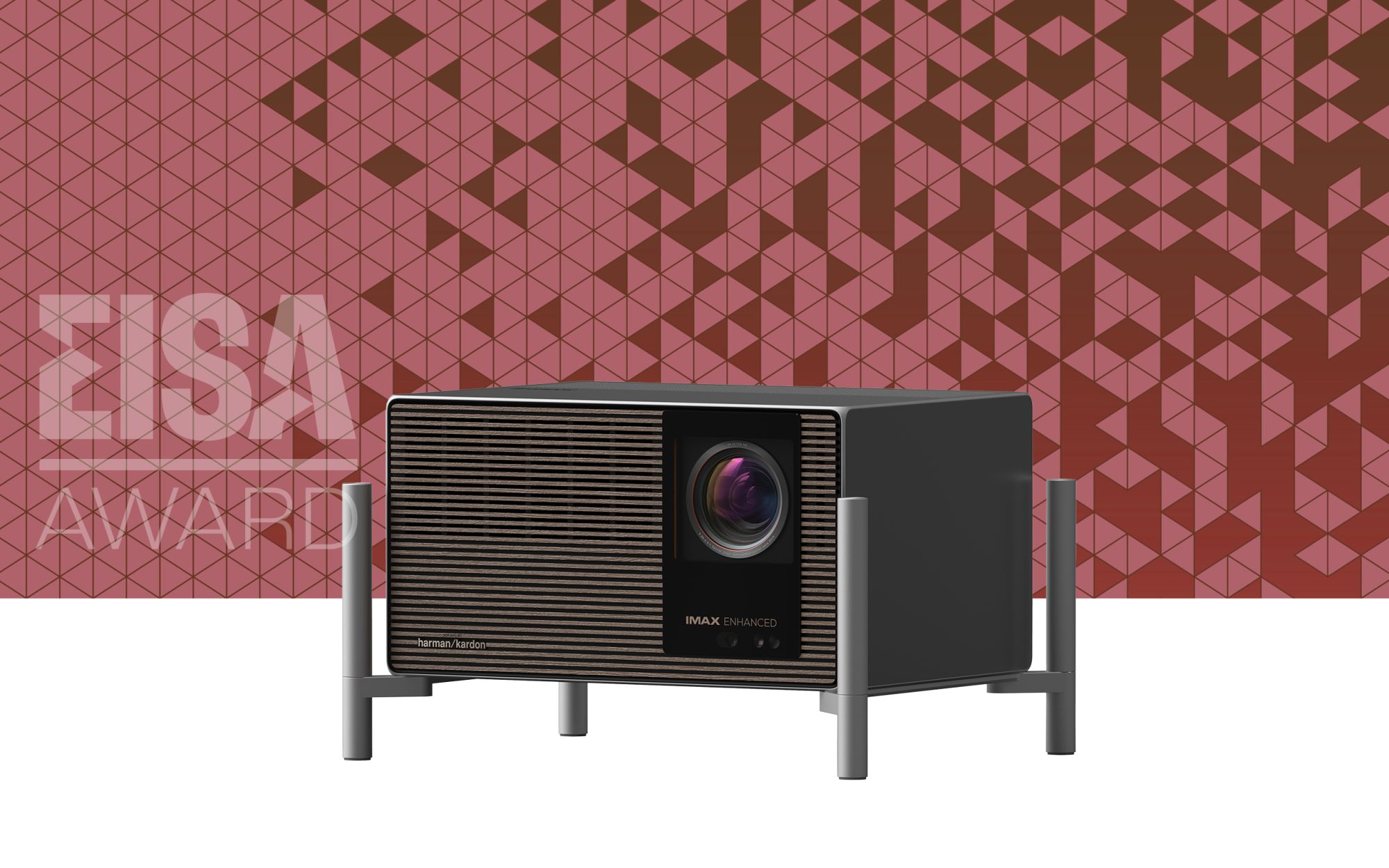
Three projector categories, two brands
EISA, the European association of technology magazines and websites, has published its 2026-2027 awards. Within the 32-award Home Theatre and Vision group, exactly three go to projectors:
- EISA Premium HT Projector 2026-2027: XGIMI TITAN Noir Ultra Max
- EISA Premium Smart Projector 2026-2027: Hisense XR10
- EISA Best Buy UST Projector 2026-2027: Hisense PT1
Two brands took all three, and neither is a traditional home-cinema name.
What the citations actually praise
The published citations are specific enough to read as a statement of priorities. For the TITAN Noir Ultra Max, EISA highlights a triple-laser source rated up to 8,000 lumens, 110% of BT.2020, a dual mechanical iris paired with Dynamic Black Level Enhancement, 2.05x zoom with vertical and horizontal lens shift, Anti-RBE rainbow-effect reduction, and 240Hz Full HD gaming with VRR across three HDMI inputs.
For the XR10, the jury cites the LPU 3.0 laser engine, up to 6,000 ANSI lumens, 6,000:1 native contrast, 118% of BT.2020, 2.38x zoom, a four-camera and dual time-of-flight alignment system, liquid cooling, a 122mm all-glass lens, VIDAA and Devialet-tuned audio.
The PT1 wins on breadth rather than peak numbers: a TriChroma laser system across DCI-P3 and BT.2020, 80-inch to 150-inch images, low input lag in game mode, VIDAA U9, Dolby Atmos and DTS:X decoding, dual-camera auto alignment and Low Visual Fatigue certification.
These are manufacturer specifications quoted by the jury, not independently measured figures.
The priorities on display
Read together, the citations reward the same four things: high claimed brightness, a wide laser colour gamut, automated setup and a usable smart platform. Contrast appears as a mechanism rather than a headline: the iris and dynamic black system on the XGIMI, a 6,000:1 native figure on the XR10 that is modest by dedicated home-cinema standards.
Gaming has moved from footnote to criterion, with two of the three citations naming input lag or refresh rate. So has installation: zoom range, lens shift and camera-based alignment appear in every case, which suggests a jury thinking about ordinary rooms rather than dedicated ones.
Who is missing
There is no award here for a three-chip or lamp-based projector, and no JVC, Sony, Epson or Barco in the projector list. That is worth stating plainly rather than over-reading. EISA judges what its member magazines test within the year, and eligibility depends on European availability and timing, so an absence is not a verdict.
Still, the shape of the result matches what the market has been doing. The projectors arriving in volume in Europe, with retail distribution and a streaming platform built in, are increasingly RGB-laser DLP models from XGIMI, Hisense and their peers. The awards have followed the products.
A credible shortlist, not a measurement
An EISA award is a credible shortlist signal, because it comes from working reviewers rather than a single publication. It is not a measurement. None of the three citations quotes a calibrated lumen figure, a post-calibration gamut coverage, an input lag in milliseconds or a black level.
Treat the list as three starting points for three room types: a long-throw enthusiast projector, a bright long-throw smart model and a value UST. The choice between them is still decided by the room.
The questions an award cannot answer
The open questions are the ones awards cannot answer. On the TITAN Noir Ultra Max: how much of the 8,000-lumen rating survives in a calibrated cinema mode, and how audible the fans are at that output. On the XR10: whether 6,000:1 native contrast holds up on a large screen without dynamic assistance doing the work. On the PT1: how the UST geometry behaves on an ambient-light-rejecting screen, and what the input lag measures at 4K.
Sources
Related Reading
XGIMI Unveils HORIZON 30 Series: 4K at 120Hz, Dual Iris Technology, and Up to 10,000:1 Native Contrast
XGIMI unveils the HORIZON 30 Pro, Max, and Ultra Max with RGB triple laser, 4K 120Hz, Dual Iris technology, and major contrast improvements.
Apple Music Hall Will Stream Concerts Globally From a 48-Speaker Spatial Audio Venue
Apple's new 600-capacity London venue combines Spatial Audio production, multicamera capture and global livestreaming, but home playback formats remain unannounced.
Epson Brings Three 4K Laser Projectors to the US From $1,999
The Home Cinema LS5000, LS6000 and short-throw LS7500 combine 3LCD laser engines, 4K/120Hz input and prices from $1,999.99.