ProjectorCentral refreshes its 4K UST recommendations for the laser-TV market
Six brands, one crowded shelf: ProjectorCentral's end-of-May 2026 UST refresh sorts the 4K laser-TV field, and the screen still decides more than the spec sheet.
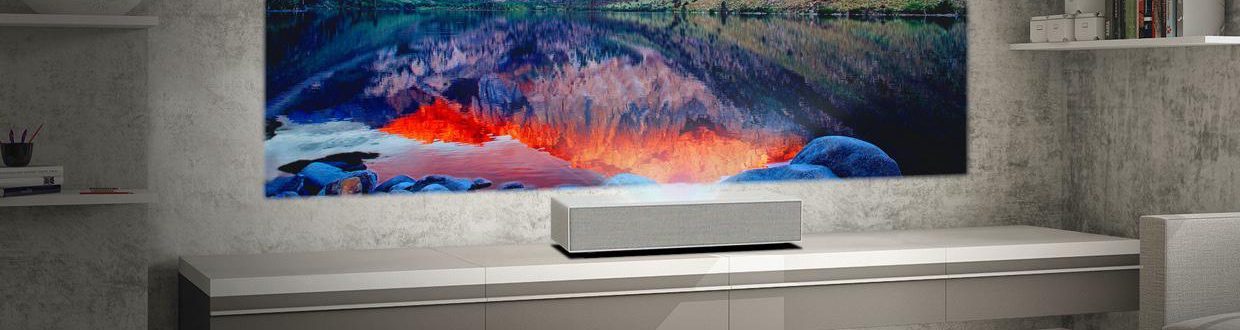
Hisense, Epson, AWOL, Formovie, Nexigo and Samsung all appear in ProjectorCentral's updated ultra-short-throw recommendations at the end of May 2026, and that list of names is the point: laser TV is no longer a niche category. Buyers now have multiple 4K UST options across different price bands, brightness levels and feature sets.
More choice makes buying harder, because UST projectors are highly room-dependent. Laser TVs can look similar in photos, yet behave very differently once placed on furniture and paired with a screen. Throw geometry, focus, app support, audio, HDR processing and gaming behaviour all shape the ownership experience, and the projector, screen, wall colour, seating position and ambient light all affect the final image.
Less forgiving than they look
Ultra-short-throw projectors look simple because they sit close to the wall. In practice the screen must be flat, the cabinet height matters, the projector position has to be precise, and a UST ALR screen can be the difference between a convincing TV replacement and a washed-out image. A model that looks excellent with a proper ALR screen can disappoint badly on a bare wall, which is why reviews should state the screen used and explain how setup affected the result.
That is what makes the roundup useful. It puts models in context rather than treating every spec sheet as equal, and a buyer comparing those six brands needs more than brightness numbers.
Start with the room, not the specification sheet
The first question is how the room will be used. A daylight TV replacement lives or dies on screen pairing and brightness. A projector used mostly at night puts contrast, tone mapping and fan noise first. Gaming adds another layer, where input lag in the right mode matters more than HDMI buzzwords. Some buyers want the cleanest movie image, others a TV replacement for sports and streaming, others a bundled ambient-light-rejecting screen, and a strong recommendation matches the projector to that use rather than sorting by price or brightness.
The UST market will keep expanding. The winners will be the models that make setup predictable, which is the difference between a large image that feels magical and one that feels permanently fussy.
Related Reading
XGIMI Unveils HORIZON 30 Series: 4K at 120Hz, Dual Iris Technology, and Up to 10,000:1 Native Contrast
XGIMI unveils the HORIZON 30 Pro, Max, and Ultra Max with RGB triple laser, 4K 120Hz, Dual Iris technology, and major contrast improvements.
Apple Music Hall Will Stream Concerts Globally From a 48-Speaker Spatial Audio Venue
Apple's new 600-capacity London venue combines Spatial Audio production, multicamera capture and global livestreaming, but home playback formats remain unannounced.
Epson Brings Three 4K Laser Projectors to the US From $1,999
The Home Cinema LS5000, LS6000 and short-throw LS7500 combine 3LCD laser engines, 4K/120Hz input and prices from $1,999.99.