Acer HL6820GTV brings 4K laser, Google TV and high-refresh gaming to EMEA
4,000 lumens, Google TV, VRR and high-refresh 1080p gaming in one 4K laser box: Acer pitches the HL6820GTV at bright EMEA living rooms, not dark cinemas.
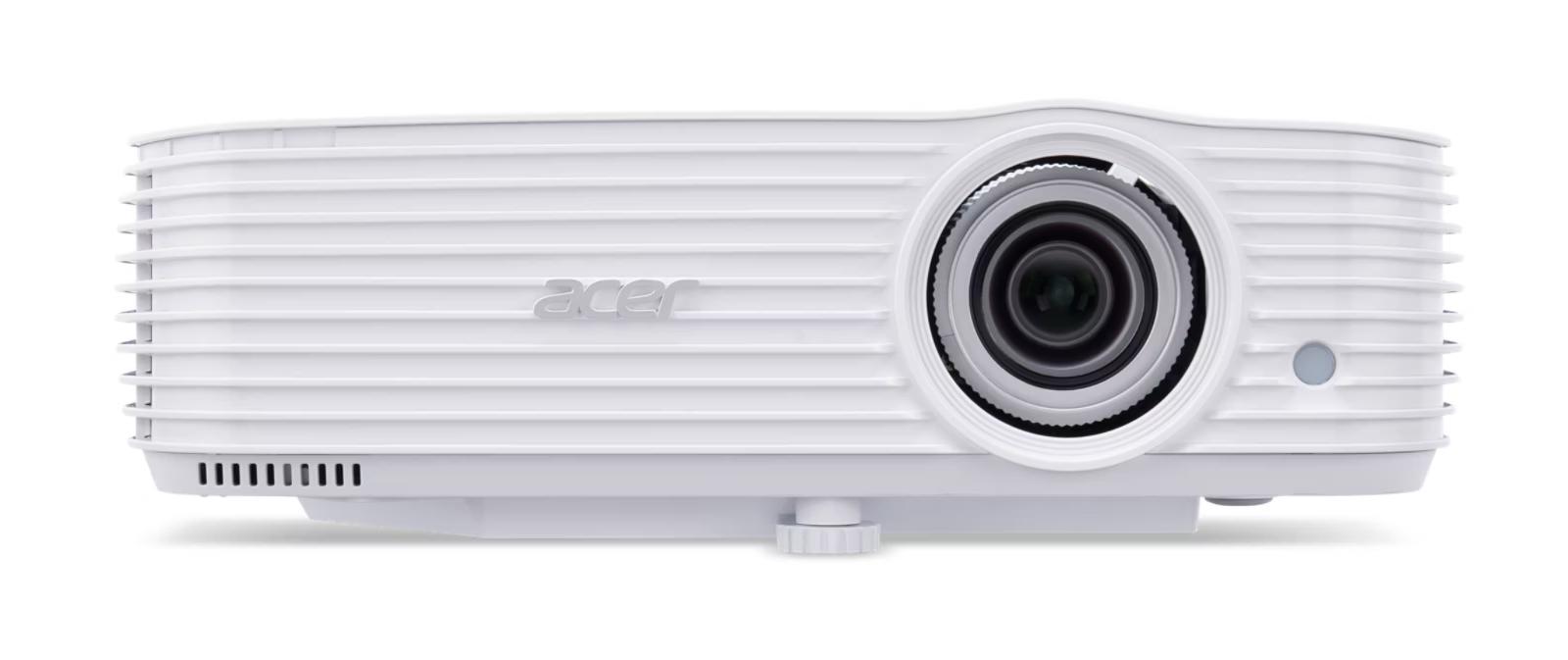
Nothing on the HL6820GTV's spec sheet is exotic on its own. The combination is the point: a 4K UHD DLP projector with a laser light source, 4,000 lumens, Google TV built in, variable refresh-rate support and low-lag gaming modes, added to Acer's home-entertainment range for EMEA. That bundle puts it in the modern living-room category rather than with the lamp-based home-theatre boxes that expected a fully dark room.
Acer is aiming at buyers who want one large display for streaming, sport and console gaming without adding a separate smart dongle on day one. The product page lists Rec.709 colour targeting, a long light-source life claim, a football mode and responsive gaming alongside the brightness figure. Google TV counts for a lot here, because projectors are increasingly judged by daily usability as much as picture quality, and the spec sheet makes no attempt to hide behind cinema-only language. Acer expects this projector to be used like a very large everyday display, not only as a weekend movie machine.
Read the VRR footnote before buying it for a console
The product page notes that VRR availability depends on the source device. That footnote deserves attention. VRR language on a projector can hinge on signal format, source device and picture mode, and a console owner will care less about the badge than about whether the projector accepts the signal cleanly, switches modes quickly and keeps input lag low without crushing colour or shadow detail. The modes to check are 4K60 and the high-refresh 1080p options, separately, since a projector can be fast at one and slower at another.
Where a 4,000-lumen DLP can fall short
A bright DLP laser projector can look impressive in mixed lighting, but that does not automatically translate to deep blacks or subtle HDR shadow detail in a dark room. Contrast, tone mapping and image uniformity are the open items for anyone planning to watch films in the evening, and the 4,000-lumen figure is only useful if the projector holds a balanced image after basic calibration rather than relying on an exaggerated bright mode.
Three use cases will decide it. For calibrated SDR films, the numbers are post-calibration brightness, Rec.709 accuracy and contrast. For HDR streaming, tone mapping and highlight roll-off count for more than peak lumens. For gaming, it is input lag at 4K60 and in the 1080p high-refresh modes, plus any VRR limitations. If contrast is shallow or Google TV feels sluggish after a few weeks of normal use, the same specification sheet becomes much less persuasive. If those areas line up, the HL6820GTV is a sensible bright-room projector for sport, casual gaming and streaming.
Related Reading
XGIMI Unveils HORIZON 30 Series: 4K at 120Hz, Dual Iris Technology, and Up to 10,000:1 Native Contrast
XGIMI unveils the HORIZON 30 Pro, Max, and Ultra Max with RGB triple laser, 4K 120Hz, Dual Iris technology, and major contrast improvements.
Apple Music Hall Will Stream Concerts Globally From a 48-Speaker Spatial Audio Venue
Apple's new 600-capacity London venue combines Spatial Audio production, multicamera capture and global livestreaming, but home playback formats remain unannounced.
Epson Brings Three 4K Laser Projectors to the US From $1,999
The Home Cinema LS5000, LS6000 and short-throw LS7500 combine 3LCD laser engines, 4K/120Hz input and prices from $1,999.99.