Optoma UHZ78LV review coverage will decide whether the badges mean much
What Hi-Fi calls the Optoma UHZ78LV bright and bold. Whether its Dolby Vision, HDR10+ and IMAX Enhanced badges survive a dark-room film night is the review question that counts.
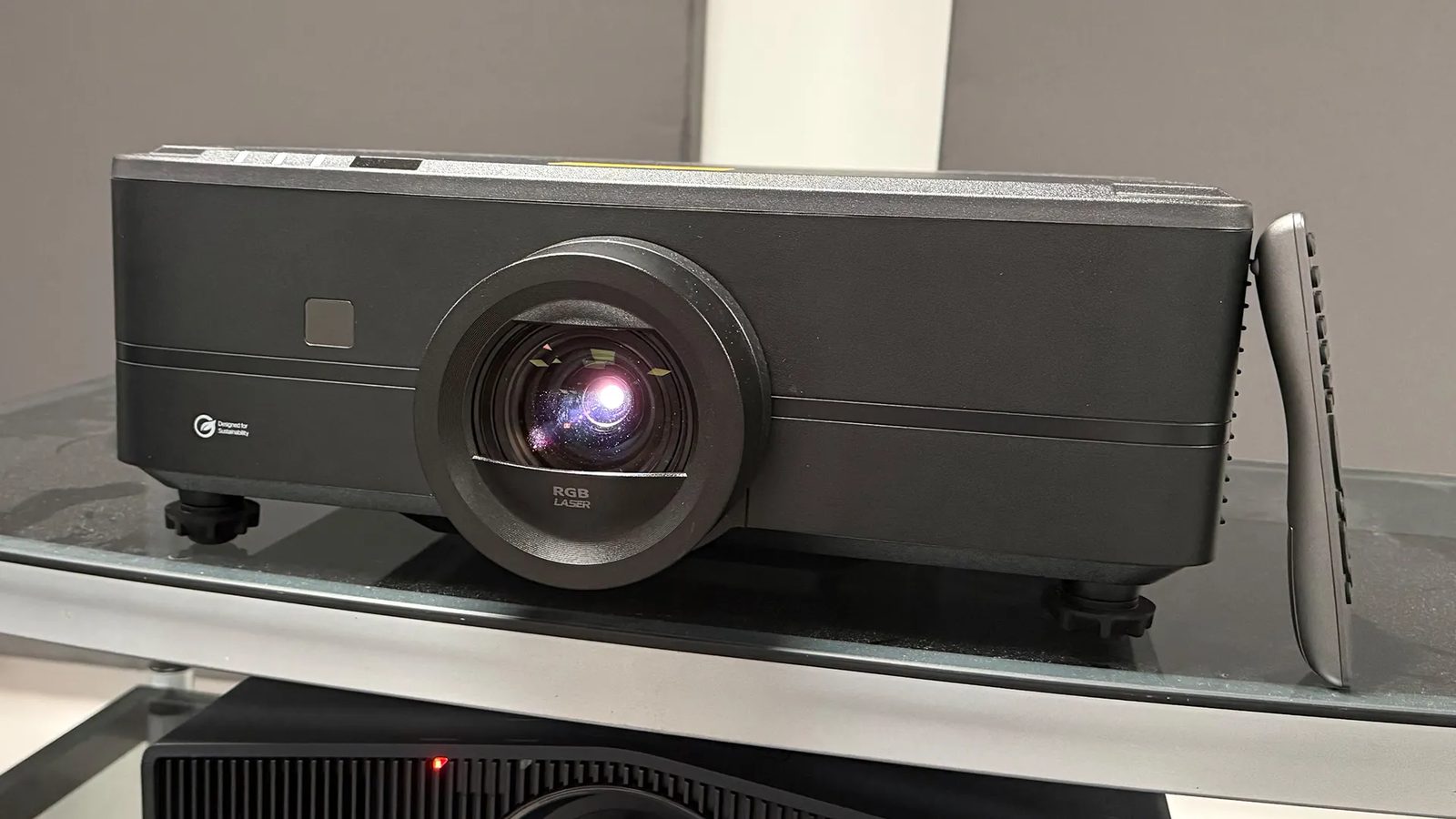
What Hi-Fi's review page gives the Optoma UHZ78LV a clear identity: a bright, bold projector with strong performance in rooms that are not completely dark. It is a fair frame for an RGB triple-laser 4K UHD model wearing Dolby Vision, HDR10+ and IMAX Enhanced badges, and it sets the terms on which every other review should judge it.
Those badges are exactly what buyers want to see in 2026, and they guarantee nothing about projection performance. Projectors cannot reach TV peak brightness, they depend on screen gain and room control, and HDR lives or dies on tone mapping. Bright DLP laser projectors split opinion for the same reason: some viewers love the sharpness and punch, others notice black-level limits or HDR shortcuts.
Not a black-room reference, so judge it as an all-rounder
A projector with this much claimed brightness should not be judged only as a black-room reference model. A good bright-room projector keeps colour vivid without pushing every mode into showroom exaggeration, and still offers a quieter, more accurate mode for film nights. The harder test is the transition: whether it can move from sport and gaming to a dark-room movie without feeling like two different products. Awards and launch claims describe positioning. They cannot say whether the projector holds together in a calibrated room.
The questions a review has to answer
How much brightness remains after calibration, how laser dimming behaves, whether HDR preserves shadow detail, and what the real input lag is. Dolby Vision against HDR10 comparisons, contrast, gamut coverage, greyscale tracking, fan noise and rainbow sensitivity fill in the rest, along with ordinary TV and sports content, because that is where a projector of this size and cost justifies itself.
If several reviews converge on the same strengths and weaknesses, buyers will know whether the UHZ78LV is a useful all-rounder or a demo-mode specialist. The movie-focused viewer who cares about tone and shadow detail is the one it still has to convince.
Related Reading
XGIMI Unveils HORIZON 30 Series: 4K at 120Hz, Dual Iris Technology, and Up to 10,000:1 Native Contrast
XGIMI unveils the HORIZON 30 Pro, Max, and Ultra Max with RGB triple laser, 4K 120Hz, Dual Iris technology, and major contrast improvements.
Apple Music Hall Will Stream Concerts Globally From a 48-Speaker Spatial Audio Venue
Apple's new 600-capacity London venue combines Spatial Audio production, multicamera capture and global livestreaming, but home playback formats remain unannounced.
Epson Brings Three 4K Laser Projectors to the US From $1,999
The Home Cinema LS5000, LS6000 and short-throw LS7500 combine 3LCD laser engines, 4K/120Hz input and prices from $1,999.99.