Optoma UHZ78LV targets bright-room flagship home cinema
Five thousand lumens plus Dolby Vision, HDR10+ and IMAX Enhanced: Optoma pitches the UHZ78LV 4K RGB triple-laser projector at living rooms that defeat dimmer models.
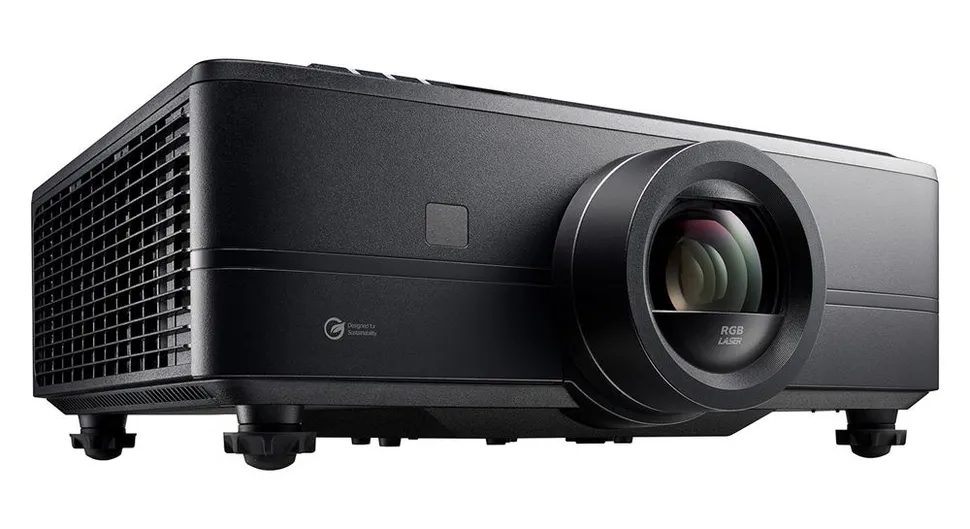
Five thousand lumens, Dolby Vision, HDR10+ and IMAX Enhanced on one home projector: that is the pitch Optoma's European press material makes for the UHZ78LV, a 4K UHD RGB triple-laser model positioned as a flagship for rooms that need more brightness than a traditional dark-room model.
That combination is aimed at buyers who want one projector to handle movies, TV, sport and games in a multipurpose room. It is also an attempt to bring TV-like HDR format support into projection, where dynamic metadata has historically been less common.
Where 5,000 lumens helps and where it hurts
A 5,000-lumen class projector earns its keep in rooms that are not fully light controlled, but brightness alone is not picture quality. In a dark room, unrestrained output can lift blacks and make highlights feel less controlled. The best bright projectors pair the light with good dimming, careful tone mapping and accurate picture modes.
The RGB triple-laser source should help colour volume, and the format list is strong. The question is whether Optoma's processing keeps HDR natural rather than simply punchy.
The bright-room flagship lane
Optoma is trying to occupy a difficult category. Buyers in it want several things at once: enough light for less-than-perfect rooms, enough contrast for movie nights, modern HDMI behaviour and a picture that does not look artificial. A high-brightness home projector turns into a compromise quickly if its bright modes sacrifice colour accuracy or black level.
The brand's DLP history cuts both ways. Optoma understands the appeal of sharp single-chip imaging, but modern buyers also expect strong HDR handling and gaming support, and bright DLP projectors are often challenged on exactly the black level and colour accuracy a flagship needs.
A fair test would separate maximum brightness from useful brightness, since the first number is context and the second is what owners watch, and would run Dolby Vision, HDR10+, HDR10 and SDR content separately, with latency, fan noise and calibrated output checked in both bright-room and dark-room modes.
The most promising home for the UHZ78LV is a living room or media room where a dimmer projector would struggle. If it can stay bright while keeping colour and tone mapping under control, it earns the flagship label. If it needs aggressive modes to impress, it is a showroom projector rather than a serious home-cinema option.
Related Reading
XGIMI Unveils HORIZON 30 Series: 4K at 120Hz, Dual Iris Technology, and Up to 10,000:1 Native Contrast
XGIMI unveils the HORIZON 30 Pro, Max, and Ultra Max with RGB triple laser, 4K 120Hz, Dual Iris technology, and major contrast improvements.
Apple Music Hall Will Stream Concerts Globally From a 48-Speaker Spatial Audio Venue
Apple's new 600-capacity London venue combines Spatial Audio production, multicamera capture and global livestreaming, but home playback formats remain unannounced.
Epson Brings Three 4K Laser Projectors to the US From $1,999
The Home Cinema LS5000, LS6000 and short-throw LS7500 combine 3LCD laser engines, 4K/120Hz input and prices from $1,999.99.