The 2026 projector market is becoming laser-first
Acer, Epson, Hisense, XGIMI, JMGO, Valerion, Christie and Fujifilm all built 2026 launches around laser light sources, which makes light-source type a poor basis for a verdict.
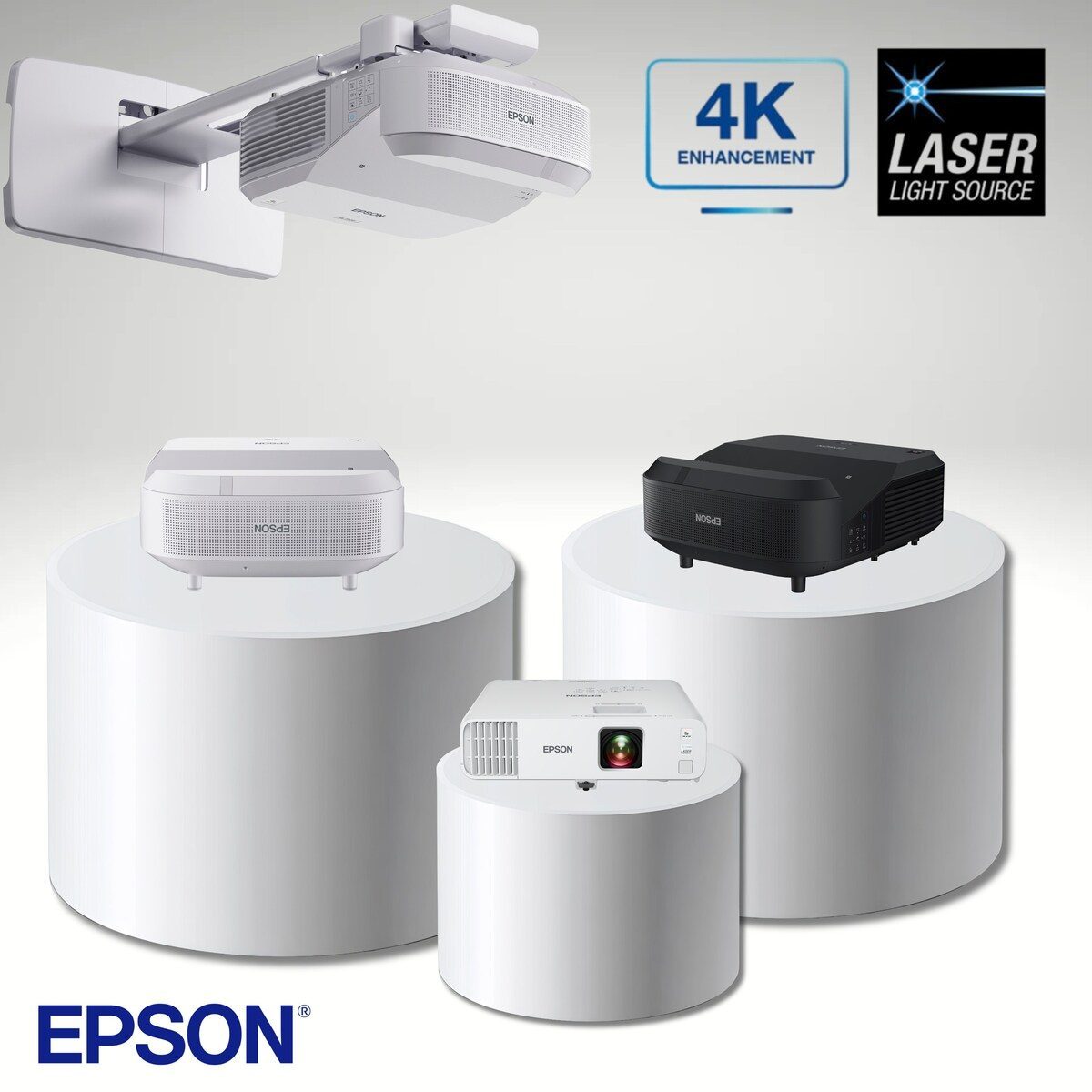
Laser has stopped being the premium option on the 2026 spec sheet and become the default. Acer is using it in home entertainment and Vero models. Epson is expanding it through PowerLite, BrightLink and Lifestudio. Hisense, XGIMI, JMGO and Valerion are pushing RGB laser in lifestyle and gaming projectors, and Christie and Fujifilm are doing the same in professional and cinema spaces.
That does not make every laser projector better than every lamp projector. It means the centre of gravity has moved. New products are increasingly designed around long light-source life, quick startup, high brightness and reduced maintenance.
Lamp anxiety and awkward rooms
Projector ownership used to include lamp anxiety. Brightness changed over time, replacement lamps cost money, and casual users often treated the projector as a special-occasion device. Laser light sources remove much of that friction. They also fit the way people now use projectors: streaming, gaming, sport, classroom use, meetings and mixed-light rooms.
The other shift is placement. Optical zoom, lens shift, UST optics, gimbals and automatic screen tools are showing up everywhere. Manufacturers know that most buyers do not have perfect rooms.
Laser is the baseline, not the verdict
Laser does not solve contrast by itself. A very bright projector can still have a mediocre black level. RGB laser can produce wide colour but may also show speckle or need careful calibration. Smart platforms make life easier until software support lapses, at which point they age badly.
The more consequential shift is segmentation. Laser is showing up in affordable living-room models, compact smart projectors, serious home-cinema products and commercial installs. "Laser projector" has become too broad to be a useful recommendation on its own. Buyers need to ask what kind of laser engine, what colour performance, what contrast behaviour and what setup flexibility they are getting.
So light-source type should not be the verdict in a 2026 review. A laser DLP model can be bright but weak in black level. A 3LCD model can be colourful but still need careful tone mapping. An RGB laser system can be wide-gamut but oversaturated if the modes are poorly tuned. The useful language is specific: calibrated lumens, colour gamut after calibration, contrast, HDR roll-off, input lag and noise. Execution is where the differences live.
Related Reading
XGIMI Unveils HORIZON 30 Series: 4K at 120Hz, Dual Iris Technology, and Up to 10,000:1 Native Contrast
XGIMI unveils the HORIZON 30 Pro, Max, and Ultra Max with RGB triple laser, 4K 120Hz, Dual Iris technology, and major contrast improvements.
Apple Music Hall Will Stream Concerts Globally From a 48-Speaker Spatial Audio Venue
Apple's new 600-capacity London venue combines Spatial Audio production, multicamera capture and global livestreaming, but home playback formats remain unannounced.
Epson Brings Three 4K Laser Projectors to the US From $1,999
The Home Cinema LS5000, LS6000 and short-throw LS7500 combine 3LCD laser engines, 4K/120Hz input and prices from $1,999.99.