Hisense XR10 and PX4-PRO split the laser projector market in two
At CES 2026 Hisense split its laser line in two, with the long-throw XR10 for dedicated rooms and the ultra-short-throw PX4-PRO for wall-hugging TV replacement.
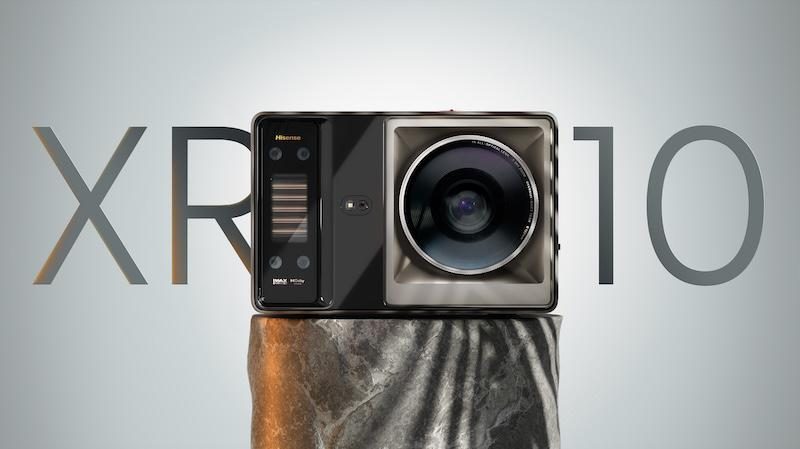
Two projectors, two rooms. Hisense's CES 2026 lineup does not treat "laser projector" as one category: the XR10 is the long-throw option for large screens and more flexible distance placement, and the PX4-PRO is the ultra-short-throw model for users who want a TV-replacement setup near the wall.
That split is useful. UST and long-throw projectors solve different problems, and buyers often get into trouble when they choose based on brightness alone.
XR10 versus PX4-PRO
The XR10 is about high output, optical flexibility and a more traditional projection layout. It is likely the more natural fit for people with a dedicated room, a ceiling mount or a back-of-room shelf. The PX4-PRO is about convenience and front-of-room placement. It will depend heavily on screen pairing and room lighting.
Both models fit Hisense's larger Laser Home Cinema strategy. The company has been pushing TriChroma laser technology, smart TV integration and large-screen viewing as an alternative to giant flat panels. The XR10 is the showcase model: higher ambition, higher expectations and likely a higher price. The PX4-PRO looks like the model that could matter more to normal buyers if it carries enough of the same laser-TV thinking into a more accessible package.
Segmentation is the wider trend
The two-model approach mirrors the broader projector market. Brands are no longer launching one generic home projector and hoping it fits everyone. They are separating flagship UST, lifestyle compact, gaming-focused and education/proAV products more clearly. Hisense has enough TV-market experience to understand that segmentation, but projector execution still has to be judged on optics and setup, not only feature labels. The buyer's room should decide the format before the spec sheet does.
Demos impress, comparisons decide
CES demos are designed to impress, not to answer every question. Beyond brightness, the XR10 and PX4-PRO should be compared on contrast, colour volume, black level, brightness after calibration, lens uniformity, input lag, fan noise, HDR behaviour, smart platform speed, HDMI support and audio quality. For the PX4-PRO, screen compatibility is critical, and UST buyers need clear guidance on screens, furniture height and whether professional installation is recommended. For the XR10, lens quality and brightness management are the bigger questions.
If Hisense communicates those differences cleanly, the lineup becomes easier to shop. If the specs blur together, buyers may struggle to understand why one model costs more than another.
Related Reading
XGIMI Unveils HORIZON 30 Series: 4K at 120Hz, Dual Iris Technology, and Up to 10,000:1 Native Contrast
XGIMI unveils the HORIZON 30 Pro, Max, and Ultra Max with RGB triple laser, 4K 120Hz, Dual Iris technology, and major contrast improvements.
Apple Music Hall Will Stream Concerts Globally From a 48-Speaker Spatial Audio Venue
Apple's new 600-capacity London venue combines Spatial Audio production, multicamera capture and global livestreaming, but home playback formats remain unannounced.
Epson Brings Three 4K Laser Projectors to the US From $1,999
The Home Cinema LS5000, LS6000 and short-throw LS7500 combine 3LCD laser engines, 4K/120Hz input and prices from $1,999.99.