Hisense PX4-PRO is the UST model to watch after the XR10 rollout
With the XR10 now visible in Hisense's own retail channel, the ultra-short-throw PX4-PRO becomes the CES 2026 projector to track for availability.
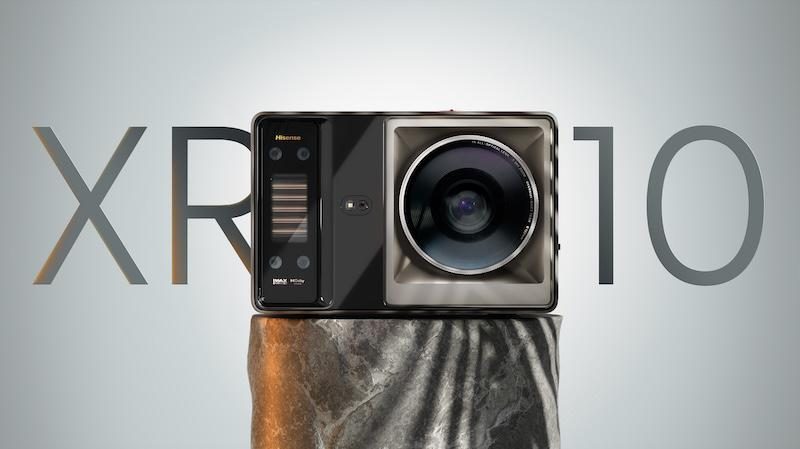
The XR10 has started appearing through Hisense's own retail channel, and that makes the PX4-PRO, its ultra-short-throw sibling from CES, the next Hisense model to track. Hisense introduced the two as different answers to the premium home projector market: the XR10 is the long-throw, high-brightness model, the PX4-PRO the UST follow-up aimed at the laser TV crowd.
The PX4-PRO carries weight because Hisense already has credibility in UST projection. The PX3-Pro became a serious reference point for the category, so the next model is not just another launch. It is a chance to see how far Hisense can push brightness, colour, gaming and optical control in a living-room-friendly form.
From show floor to shop
ProjectorCentral's CES coverage framed the XR10 and PX4-PRO as part of Hisense's continued Laser Home Cinema strategy. Tom's Guide and other CES reports highlighted the XR10's brightness and the PX4-PRO's UST role. Availability has been less clear than the launch messaging, which is why this remains a release watch rather than a review. The XR10 reaching Hisense's store is the best sign so far that the 2026 projector lineup is moving from show-floor announcement to actual products.
The category has also become more competitive since the PX3-Pro. Buyers now compare brightness, colour gamut, Dolby Vision handling, screen bundles, audio quality and gaming performance across several brands. A new PX model has to do more than be bright; it has to make setup and everyday use simple enough to replace a television.
Demo content flatters a UST
UST projectors can look spectacular with bright demo content and still struggle with black level in a fully dark room. For the PX4-PRO the questions are throw geometry, screen pairing, contrast, Dolby Vision behaviour, gaming latency, focus uniformity, HDR tone mapping and whether the dynamic iris or laser dimming improves real dark-scene performance. Geometry deserves particular care, because a small placement change can distort a UST image. If Hisense includes advanced smart TV features, app responsiveness and update support belong in any assessment rather than in a footnote.
Until units are broadly available, the right stance is interest, not certainty. After the XR10 rollout, the PX4-PRO is the model for buyers who want the screen-on-wall experience without jumping into the most expensive or specialised category, and it could be the more realistic mass-market story than the XR10. Its success depends on whether Hisense can translate flagship lessons into a projector people can actually buy and set up easily.
Related Reading
XGIMI Unveils HORIZON 30 Series: 4K at 120Hz, Dual Iris Technology, and Up to 10,000:1 Native Contrast
XGIMI unveils the HORIZON 30 Pro, Max, and Ultra Max with RGB triple laser, 4K 120Hz, Dual Iris technology, and major contrast improvements.
Apple Music Hall Will Stream Concerts Globally From a 48-Speaker Spatial Audio Venue
Apple's new 600-capacity London venue combines Spatial Audio production, multicamera capture and global livestreaming, but home playback formats remain unannounced.
Epson Brings Three 4K Laser Projectors to the US From $1,999
The Home Cinema LS5000, LS6000 and short-throw LS7500 combine 3LCD laser engines, 4K/120Hz input and prices from $1,999.99.