Epson Lifestudio Grand Plus adds Google TV with Gemini to a 4K UST design
A 4,000-lumen 3LCD laser UST with Sound by Bose and Google TV plus Gemini, pitched at the DLP laser TV crowd and still awaiting contrast on a real screen.
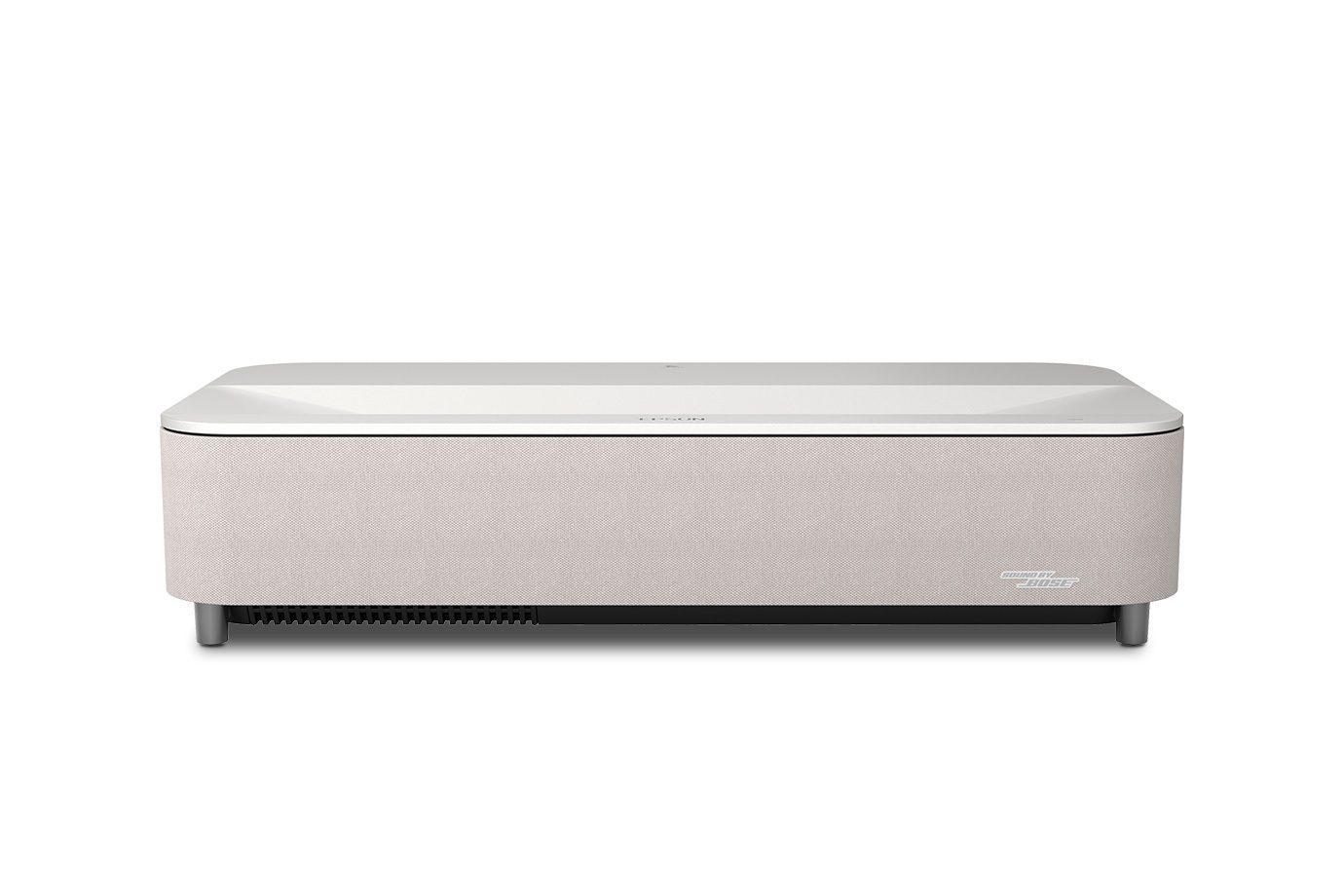
4,000 lumens of colour brightness and 4,000 of white, from a three-chip 3LCD laser engine sitting inches from the wall, with Google TV and Sound by Bose built in. That is the Lifestudio Grand Plus, Epson's 4K ultra-short-throw projector for the TV-replacement space.
It is a direct answer to the modern laser TV category: a big screen from a short distance, bright enough for normal rooms, with streaming and audio built into the unit. It is less about building a rack-and-projector theatre, and more about replacing a large TV with a cleaner front-of-room setup.
Where 3LCD earns its place in a UST
Single-chip DLP laser TVs usually lead this category. 3LCD can answer them by avoiding rainbow artefacts and holding colour brightness high, which in mixed lighting can be a real advantage, and the 4,000-lumen claim puts the Grand Plus in a strong brightness class for a lifestyle UST. The trade is normally contrast, pixel structure and processing, which is exactly what a tabletop demo hides.
The sound system is not just decoration. UST projectors often sit exactly where a soundbar would go, so integrated audio has to be at least usable. Bose tuning does not remove the need for a proper surround system, but it can make the projector more convincing as a one-box living-room display.
Judge it at 100 inches, not on a tabletop
Black level, HDR tone mapping, screen pairing and fan noise remain unanswered. Bright ultra-short-throw projectors look excellent with sport and animation, but dark film scenes reveal how much contrast is really there. The screen is the other half of the answer: a UST ambient-light-rejecting surface can change perceived contrast in a lit room more than any setting in the menu.
Because a UST projector sits close to its audience, geometry, focus uniformity, panel alignment and cabinet acoustics all need judging at a real screen size, and HDR needs testing from an external source as well as the built-in apps, since the two paths do not always process a signal the same way. If Epson pairs clean 3LCD colour with a polished Google TV build, this becomes a friendly alternative to a DLP laser TV. The missing piece is contrast at full screen size in a lit room.
Related Reading
XGIMI Unveils HORIZON 30 Series: 4K at 120Hz, Dual Iris Technology, and Up to 10,000:1 Native Contrast
XGIMI unveils the HORIZON 30 Pro, Max, and Ultra Max with RGB triple laser, 4K 120Hz, Dual Iris technology, and major contrast improvements.
Apple Music Hall Will Stream Concerts Globally From a 48-Speaker Spatial Audio Venue
Apple's new 600-capacity London venue combines Spatial Audio production, multicamera capture and global livestreaming, but home playback formats remain unannounced.
Epson Brings Three 4K Laser Projectors to the US From $1,999
The Home Cinema LS5000, LS6000 and short-throw LS7500 combine 3LCD laser engines, 4K/120Hz input and prices from $1,999.99.