Christie CP4420m-RGBH targets smaller cinema screens with hybrid laser
Hybrid RGB laser plus phosphor, shown on the CP4420m-RGBH at CinemaCon 2026, gives smaller commercial cinema screens a route off lamps without pure-RGB-laser pricing.
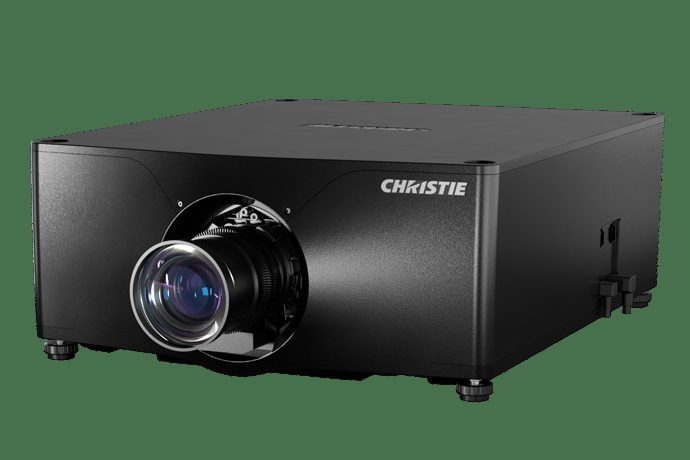
Laser illumination in commercial cinema no longer stops at the flagship auditorium. At CinemaCon 2026 Christie showed the CP4420m-RGBH alongside related CineLife+ models and put its RGBH hybrid-laser technology at the front of the stand, with smaller commercial screens as the target.
Screen fit is the story. Smaller cinema rooms need compact, efficient projectors that still meet modern expectations for colour, stability and maintenance, and a hybrid-laser platform gives exhibitors an option between older lamp systems and more expensive pure RGB laser.
Laser primaries, phosphor for the rest
RGBH refers to a hybrid system that combines RGB laser with phosphor elements, balancing colour performance, operating cost, brightness and form factor. For an operator the attraction is not only image quality: predictable operation, fewer lamp-related interruptions and lower maintenance complexity count for as much. Brightness and colour are only part of the decision; serviceability, reliability, avoiding lamp replacement and integration with existing workflows can matter more.
The evaluation that fits is not a living-room review checklist. Cinema operators will care about DCI compliance, colour stability over time, maintenance intervals, heat, noise, warranty terms and how easily the projector fits into existing screen and server setups, with brightness judged at target screen sizes rather than at maximum output. Uniformity and behaviour on smaller screens that still need premium presentation are the remaining unknowns. Christie has a long track record in cinema, so the interesting part is whether RGBH makes laser modernisation easier for more auditoriums.
A gap between lamp and pure RGB laser
For projector enthusiasts the CP4420m-RGBH is a further sign that lamp projection is becoming the exception in new premium deployments. The market is not moving to laser because it is fashionable. It is moving because uptime, brightness stability and operational simplicity are difficult to ignore, and commercial cinema often pushes illumination, processing and colour-management ideas that later reach high-end consumer and ProAV products.
Not every theatre needs a giant premium-large-format projector, and many smaller rooms still need an upgrade path that does not overload the booth or the budget. If the CP4420m-RGBH brings stronger colour and a stable light source to those rooms, it fills a gap instead of chasing a headline demo.
Related Reading
XGIMI Unveils HORIZON 30 Series: 4K at 120Hz, Dual Iris Technology, and Up to 10,000:1 Native Contrast
XGIMI unveils the HORIZON 30 Pro, Max, and Ultra Max with RGB triple laser, 4K 120Hz, Dual Iris technology, and major contrast improvements.
Apple Music Hall Will Stream Concerts Globally From a 48-Speaker Spatial Audio Venue
Apple's new 600-capacity London venue combines Spatial Audio production, multicamera capture and global livestreaming, but home playback formats remain unannounced.
Epson Brings Three 4K Laser Projectors to the US From $1,999
The Home Cinema LS5000, LS6000 and short-throw LS7500 combine 3LCD laser engines, 4K/120Hz input and prices from $1,999.99.