AWOL Aetherion spec sheet puts gaming and UST scale in the same package
VRR, ALLM, RGB triple lasers, HDR support and a 200-inch UST ambition on one spec sheet: the Aetherion line wants to replace both the TV and the gaming display.
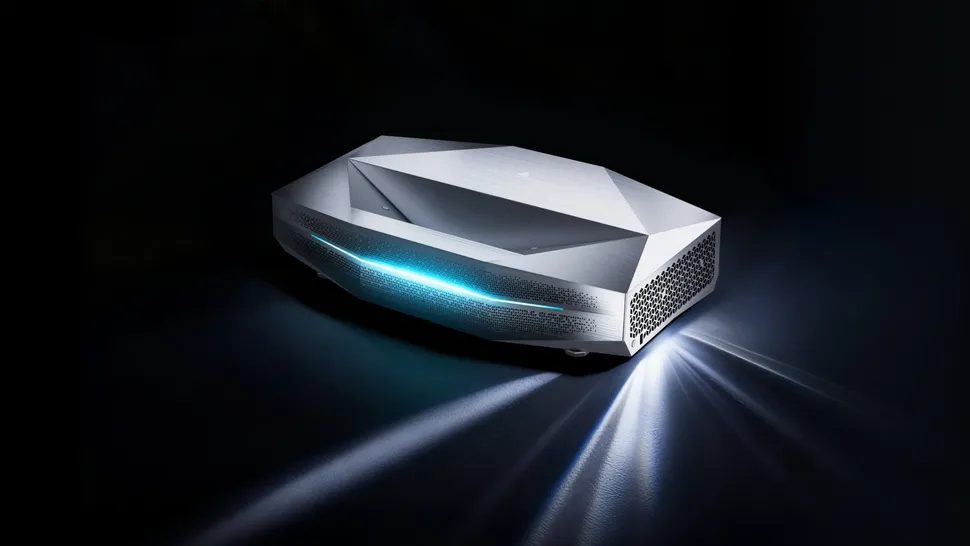
Home-cinema buyers want contrast, colour control and quiet operation. Gaming buyers want low latency, fast signal handling and predictable input modes. The AWOL Aetherion spec sheet claims to serve both, pitching VRR, ALLM and very low latency figures alongside RGB triple-laser light engines, broad HDR support and screens up to 200 inches. That puts the line in the increasingly busy category of projectors trying to replace both the TV and the gaming display.
The idea is attractive: one box near the wall, one huge image, no ceiling mount, no long HDMI run across the room. The hard part is that every feature has to work together. A UST projector can be bright and still fail at edge focus. It can support gaming modes and still show processing delay in the wrong input mode. A projector claiming both markets has to do more than list refresh-rate support; the entire signal path has to feel deliberate.
Latency is mode-specific, so read past the badge
VRR and ALLM are useful, but the important numbers depend on the mode. Buyers need the tested latency at 4K60, 1440p, 1080p120 and 1080p240 if those modes exist, checked separately, because a projector can be fast at one resolution and much slower at another. They also need to know whether geometry correction, motion smoothing or HDR processing changes input lag. Chroma handling counts too, especially for PC use, where text clarity exposes shortcuts immediately.
UST placement adds another wrinkle. Many users rely on digital keystone or screen-fit tools to square the image, and those corrections can crop resolution and sometimes add processing. A serious gaming test should run with the projector physically aligned first, then compare the convenient setup modes. A fast game will expose motion processing, input lag and edge clarity quickly on a screen this large, so the question is how much of the image stays sharp after the setup tools have done their work.
Three things AWOL has to get right
Aetherion becomes compelling if AWOL combines clean edge-to-edge focus, low gaming latency and stable HDR behaviour. That would make it more than a large-screen novelty: a real TV replacement for rooms that cannot support a long-throw installation. If PixelLock and the advertised gaming modes work together without softening the image, Aetherion has a more credible gaming argument than older laser TVs. Whether the optical system and processing are as strong as the marketing language is the one question the spec sheet cannot answer.
Related Reading
XGIMI Unveils HORIZON 30 Series: 4K at 120Hz, Dual Iris Technology, and Up to 10,000:1 Native Contrast
XGIMI unveils the HORIZON 30 Pro, Max, and Ultra Max with RGB triple laser, 4K 120Hz, Dual Iris technology, and major contrast improvements.
Apple Music Hall Will Stream Concerts Globally From a 48-Speaker Spatial Audio Venue
Apple's new 600-capacity London venue combines Spatial Audio production, multicamera capture and global livestreaming, but home playback formats remain unannounced.
Epson Brings Three 4K Laser Projectors to the US From $1,999
The Home Cinema LS5000, LS6000 and short-throw LS7500 combine 3LCD laser engines, 4K/120Hz input and prices from $1,999.99.